Adequate anterior-posterior spread in full-arch implant surgery is achieved by distributing the implants as far apart as anatomy, restorative planning, and safe surgical principles allow. The goal is to create a stable support polygon and reduce the length of the distal cantilever without compromising the sinus, nerve, implant trajectory, restorative space, or cleansability of the prosthesis.
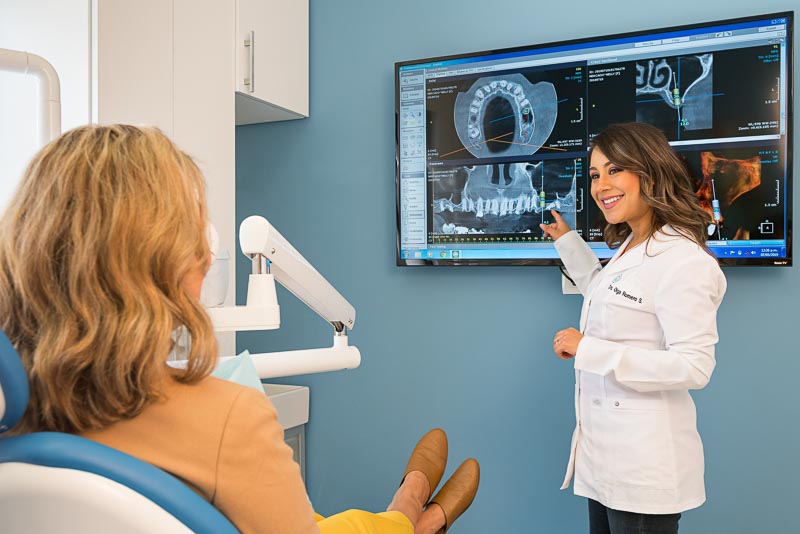
CBCT planning should identify the most posterior safe implant positions and evaluate whether tilted posterior implants can extend support while avoiding anatomical structures. In an All-on-4 configuration, posterior implants may be tilted to make better use of available bone and improve the anterior-posterior distribution. Implant angulation, emergence, multi-unit abutment selection, screw-access position, arch form, and the final tooth arrangement must all be considered together.
Simply moving implants farther posteriorly is not always better. The clinician must maintain adequate bone around the implant, avoid unsafe anatomical proximity, preserve restorative access, and prevent implant positions that make the prosthesis difficult to fabricate or maintain. When anatomy limits spread, the doctor may need to reconsider implant number, prosthetic design, cantilever length, grafting, alternative implant strategies, or the loading plan.
Dr. Nestor Marquez, SOTA Dental’s lead training doctor, teaches these details through real-case planning in the Clinical Excellence Program. Participants review patient CBCT scans, compare possible implant distributions, and rehearse the surgery on 3D-printed models. During live treatment, Dr. Nestor Marquez provides constant supervision and demonstrates how to adapt implant positions when actual anatomy or bone quality changes the plan.
Doctors interested in improving full-arch implant distribution and anterior-posterior spread through hands-on mentorship can apply for the Clinical Excellence Program with Dr. Nestor Marquez at https://sotadental.com/doctors-clinical-excellence-program/.