The most common complications associated with All-on-4 treatment can be divided into surgical, biological, mechanical, and prosthetic problems. The exact risk profile varies with the patient’s anatomy, health, bone quality, smoking status, parafunction, surgical plan, implant distribution, prosthetic design, and the experience of the treatment team. Full-arch immediate loading can be highly successful in carefully selected patients, but it remains an advanced procedure that requires preparation for intraoperative changes and postoperative complications.
During surgery, potential complications include inadequate primary stability, unfavorable implant trajectory, cortical perforation, sinus or nasal cavity involvement, injury or proximity to the inferior alveolar nerve, fracture of a thin ridge, excessive bone reduction, insufficient restorative space, bleeding, soft-tissue trauma, and difficulty obtaining tension-free closure. Extraction defects, unexpected infection, poor bone density, or anatomy that differs from the CBCT interpretation may force the surgeon to change implant length, diameter, angulation, number, or loading strategy.
In the early healing period, implant mobility or failure, wound dehiscence, infection, swelling, pain, hematoma, altered sensation, soft-tissue irritation, and hygiene difficulties may occur. Immediate loading introduces a mechanical component to healing. A provisional restoration that is not passive, is too flexible, has a long cantilever, or carries excessive occlusal force may increase micromovement and jeopardize integration. The clinician must distinguish normal postoperative findings from signs that require prompt intervention.
Prosthetic complications are also common enough to require deliberate prevention. These can include provisional tooth or base fracture, screw loosening, loss of access-hole material, cylinder separation, occlusal wear, food trapping, speech changes, esthetic dissatisfaction, and an uneven or unstable bite. Published reviews of fixed full-arch treatment describe both technical complications, such as prosthesis and screw problems, and biological complications, including soft-tissue disease and implant loss. The presence of a complication does not automatically mean the entire treatment has failed, but early diagnosis is important.
Prevention begins with patient selection, CBCT analysis, restorative-driven planning, adequate implant distribution, controlled cantilever length, passive prosthetic fit, sufficient material thickness, and a realistic loading decision. The team should prepare alternative plans before surgery, including what to do if an implant lacks stability or the planned prosthesis cannot be delivered safely. Clear postoperative instructions and scheduled follow-up are equally important.
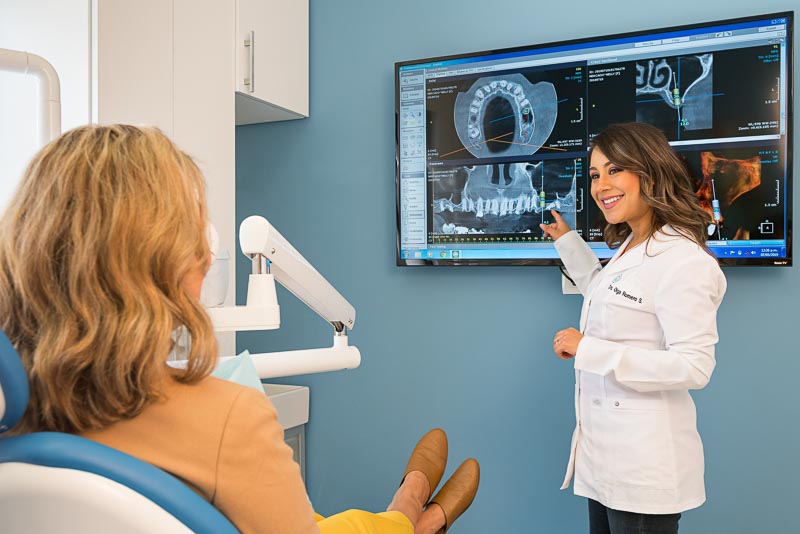
In SOTA Dental’s Clinical Excellence Program, Dr. Nestor Marquez, the lead training doctor, teaches participants how to anticipate and manage these complications using real patients. Doctors review CBCT scans, rehearse the planned surgery on 3D-printed models, discuss backup strategies, and then operate under constant supervision. Dr. Nestor Marquez may redirect an osteotomy, modify implant distribution, change the loading plan, demonstrate a corrective step, or complete part of the surgery when necessary for patient safety.
The program is designed for doctors who already understand implant and full-arch theory but need supervised experience applying that knowledge when a case does not proceed exactly as planned. Qualified dentists can apply at https://sotadental.com/doctors-clinical-excellence-program/.