Implant positions for an All-on-4 case should be determined by the planned prosthesis, available bone, anatomical limitations, biomechanics, and the ability to achieve adequate primary stability. The objective is not simply to place four implants wherever bone is present. The implants must support a functional, cleansable, and restorable full-arch prosthesis with appropriate distribution and minimal cantilever.
The anterior implants are generally planned in available anterior bone, while posterior implants may be angled to avoid anatomical structures and increase anterior-posterior spread. The clinician should evaluate the maxillary sinus, nasal floor, inferior alveolar nerve, mental foramina, ridge morphology, restorative space, implant trajectory, screw-access position, and the relationship between the implants and the final tooth arrangement.
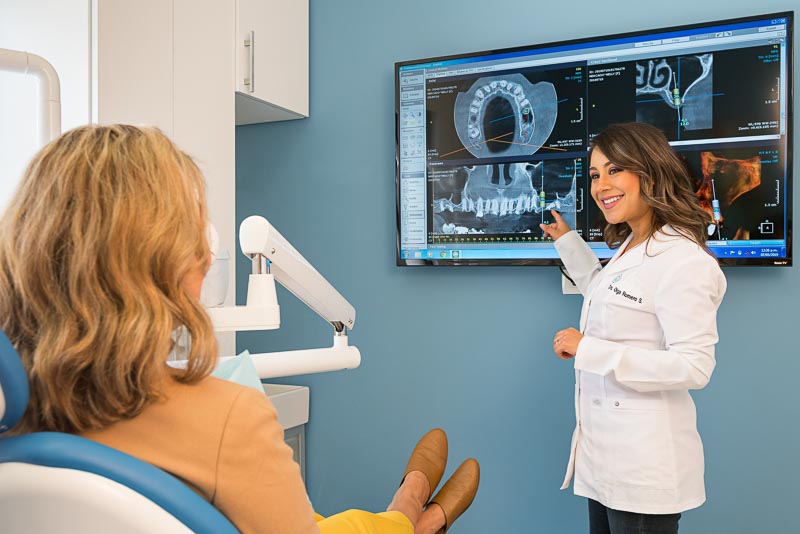
CBCT planning should be combined with restorative records and, when appropriate, digital planning or a prosthetic setup. Implant length, diameter, angulation, depth, spacing, and emergence should be reviewed. The doctor should also prepare alternative positions in case bone quality, extraction defects, or intraoperative anatomy make the initial plan unsuitable.
Dr. Nestor Marquez teaches this case-specific decision-making in SOTA Dental’s Clinical Excellence Program. As the lead training doctor, Dr. Nestor Marquez reviews each patient’s CBCT with participants, discusses possible implant distributions, and uses 3D-printed models to help doctors rehearse the procedure. During live surgery, he provides constant supervision and may demonstrate how implant positioning should be adjusted based on actual clinical findings.
Dentists seeking advanced hands-on instruction in All-on-4 implant positioning can apply for the Clinical Excellence Program with Dr. Nestor Marquez and his team at https://sotadental.com/doctors-clinical-excellence-program/.