The amount of bone reduction required for a full-arch implant case is determined by the planned prosthesis, smile line, lip dynamics, restorative material, tissue display, ridge anatomy, implant position, and the vertical and horizontal space needed for strength, esthetics, hygiene, and repairability. There is no single millimeter value that is appropriate for every patient or every prosthetic design.
Bone reduction may be necessary to create adequate restorative space, establish a level restorative platform, remove irregular or infected bone, position the transition line where it will not be visible, and allow the implants and prosthesis to be placed in a cleansable relationship. However, bone should not be removed merely because a full-arch protocol traditionally includes alveoloplasty. Every millimeter removed is irreversible and may affect implant length, soft-tissue support, facial appearance, and future treatment options.
Under-reduction can be equally problematic. Insufficient space may lead to a bulky or weak prosthesis, inadequate acrylic or zirconia thickness, poor cylinder incorporation, compromised esthetics, an overcontoured intaglio surface, difficult hygiene access, or an unfavorable occlusal relationship. A surgeon who places implants before confirming the required restorative envelope may discover that the provisional or definitive prosthesis cannot be fabricated as planned.
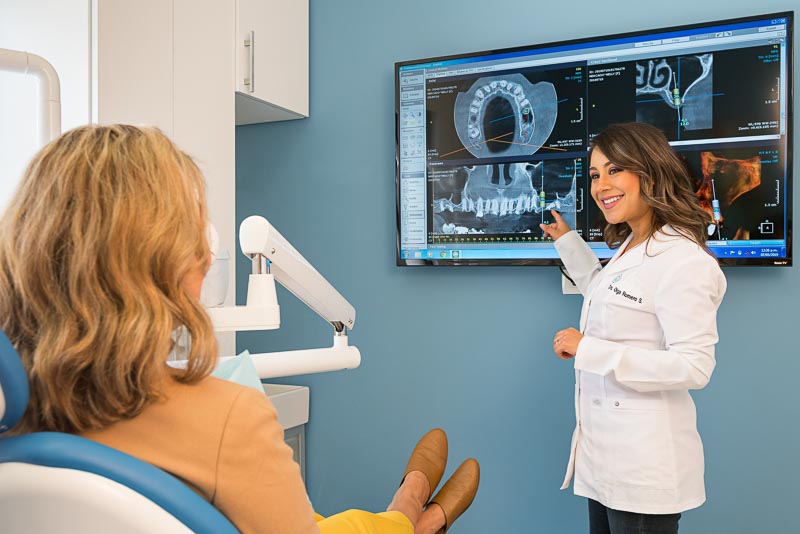
The decision should be made from a facially and prosthetically driven setup whenever possible. The team should evaluate the proposed incisal edge, tooth position, occlusal plane, smile line, lip support, tissue transition, prosthetic material, and minimum component dimensions. CBCT and digital records can then help determine whether bone reduction is required and where it should occur. Surgical guides, bone-reduction guides, reference pins, or verified intraoperative measurements may improve control, but they do not replace clinical judgment.
In SOTA Dental’s Clinical Excellence Program, Dr. Nestor Marquez, the lead training doctor, teaches participants to connect bone reduction with the final restoration rather than treating it as an isolated surgical step. Doctors review patient imaging and the proposed restorative outcome, practice on 3D-printed models, and then see how ridge anatomy and soft tissue affect the reduction during live surgery. Dr. Nestor Marquez provides direct correction to help prevent both excessive and inadequate reduction.
The correct amount is the minimum reduction needed to create a predictable surgical and restorative result for that individual patient. Doctors seeking supervised instruction in full-arch bone reduction and restorative-driven planning can apply to train with Dr. Nestor Marquez at https://sotadental.com/doctors-clinical-excellence-program/.