Immediate loading requires sufficient primary stability to limit micromovement during early healing, but there is no single measurement that should be applied universally to every implant, system, bone type, or full-arch case. Primary stability is evaluated using a combination of clinical judgment, insertion torque, implant stability measurements when available, bone quality, implant design, implant distribution, and the rigidity of the provisional prosthesis.
In a full-arch case, the clinician should confirm that each implant intended to support the immediate provisional is stable and that the implants can be rigidly splinted across the arch. The overall treatment decision also depends on implant positioning, anterior-posterior spread, occlusal control, restorative fit, parafunction, systemic health, and whether major grafting or other simultaneous procedures increase risk.
Published protocols often report minimum insertion-torque or stability values, but those values vary among studies and implant systems. A threshold should never replace the manufacturer’s instructions, the clinician’s assessment of the entire case, or a willingness to delay loading when stability is questionable. When one implant is weaker than expected, the treatment team may exclude it from the provisional, modify the prosthesis, add support when appropriate, or choose delayed loading.
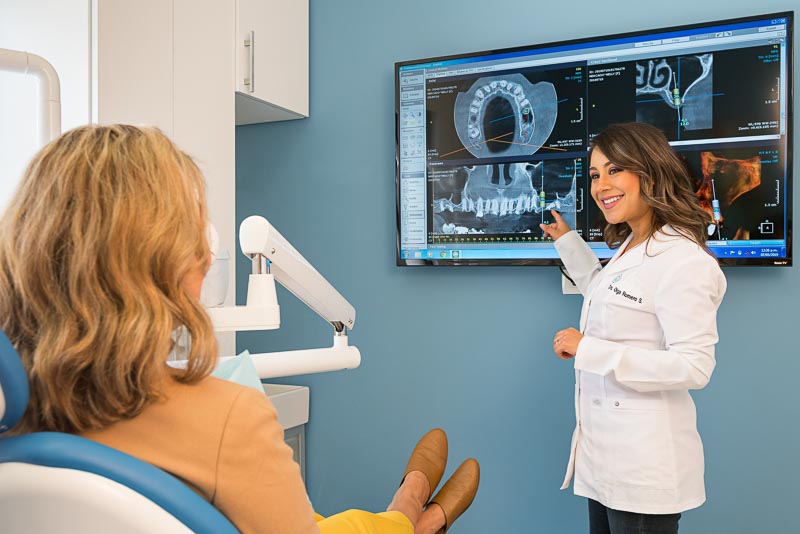
In SOTA Dental’s Clinical Excellence Program, Dr. Nestor Marquez, the lead training doctor, teaches participants how to evaluate primary stability in the context of the complete full-arch case. Doctors review the plan before surgery and then see how real bone quality, implant engagement, and prosthetic rigidity affect the loading decision. Dr. Nestor Marquez provides constant supervision and demonstrates when the original plan should be changed.
Doctors seeking practical mentorship in immediate-loading decisions can apply for the Clinical Excellence Program with Dr. Nestor Marquez at https://sotadental.com/doctors-clinical-excellence-program/.